Amazon Astro
Principal HRI Designer | 2017 – present
Training robots how to live with humans for Amazon’s first home social robot, Astro.
Key Contributions
As a Principal HRI Designer, I was responsible for shaping how Astro behaved as a social entity within the home, not just the digital UX experience.

01 - What are you doing Astro?
- Lead the development of the foundational on-device behavioral patterns
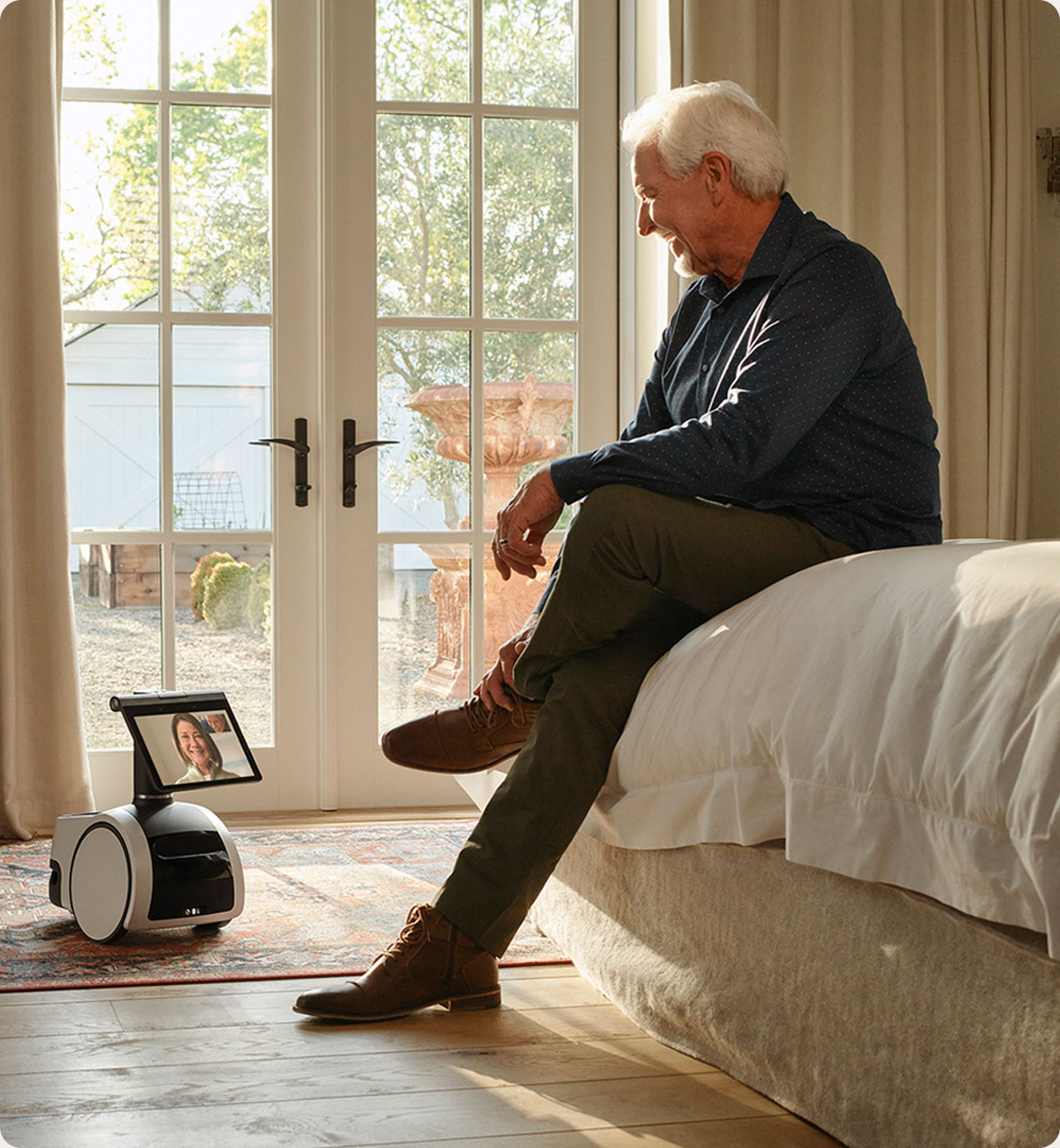
- Launched end-to-end use cases like Hangouts and Video Calling
- Defined the visual style for Astro’s visual communication
02 - Social Robotics in the LLM Era
- Spearhead the design initiative to integrate Gen AI across all aspects of the Astro experience
- Lead the design team approach to utilizing LLMs
03 - Designing for the Illusion of Life
- Designed a Character Design Framework to guide the creation of a consistent character
- Created methodologies to measure relationship with embodied AI
01
What are you doing Astro?
Unlike screen-based products, Astro communicated through movement. Every action was physical, visible, and emotionally legible.
As the on-device HRI lead, I partnered closely with engineering to define the behavioral building blocks that allowed Astro to act like a predictable, trustworthy autonomous agent.
This meant resolving questions like how Astro should respond when it lost track of a person, how it could signal where it intended to move, and how existing experiences, like Alexa video calling, needed to change for a mobile, embodied platform
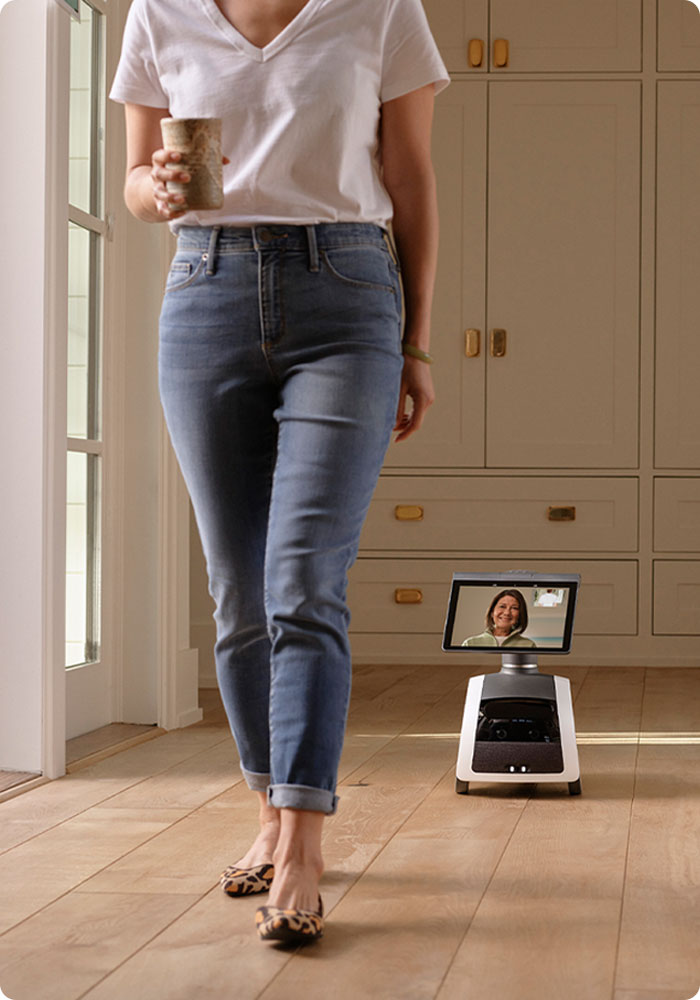
Follow HRI Pattern + Video Calling Use Case
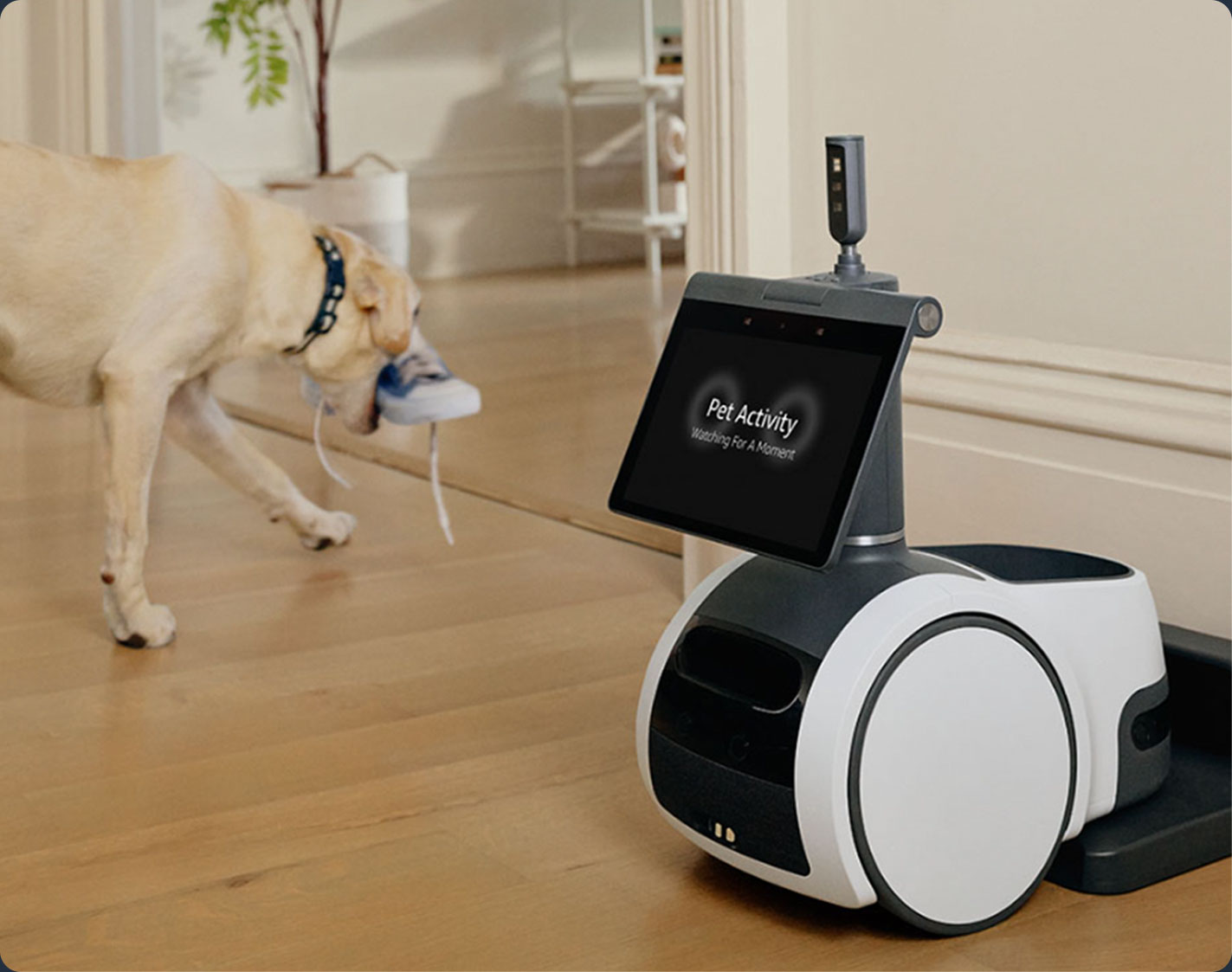
Character Forward Status Indicators

Find + Porter
02
Social Robotics in the LLM era
Large language models introduced a step-change in how social robots could reason, communicate, and adapt over time.
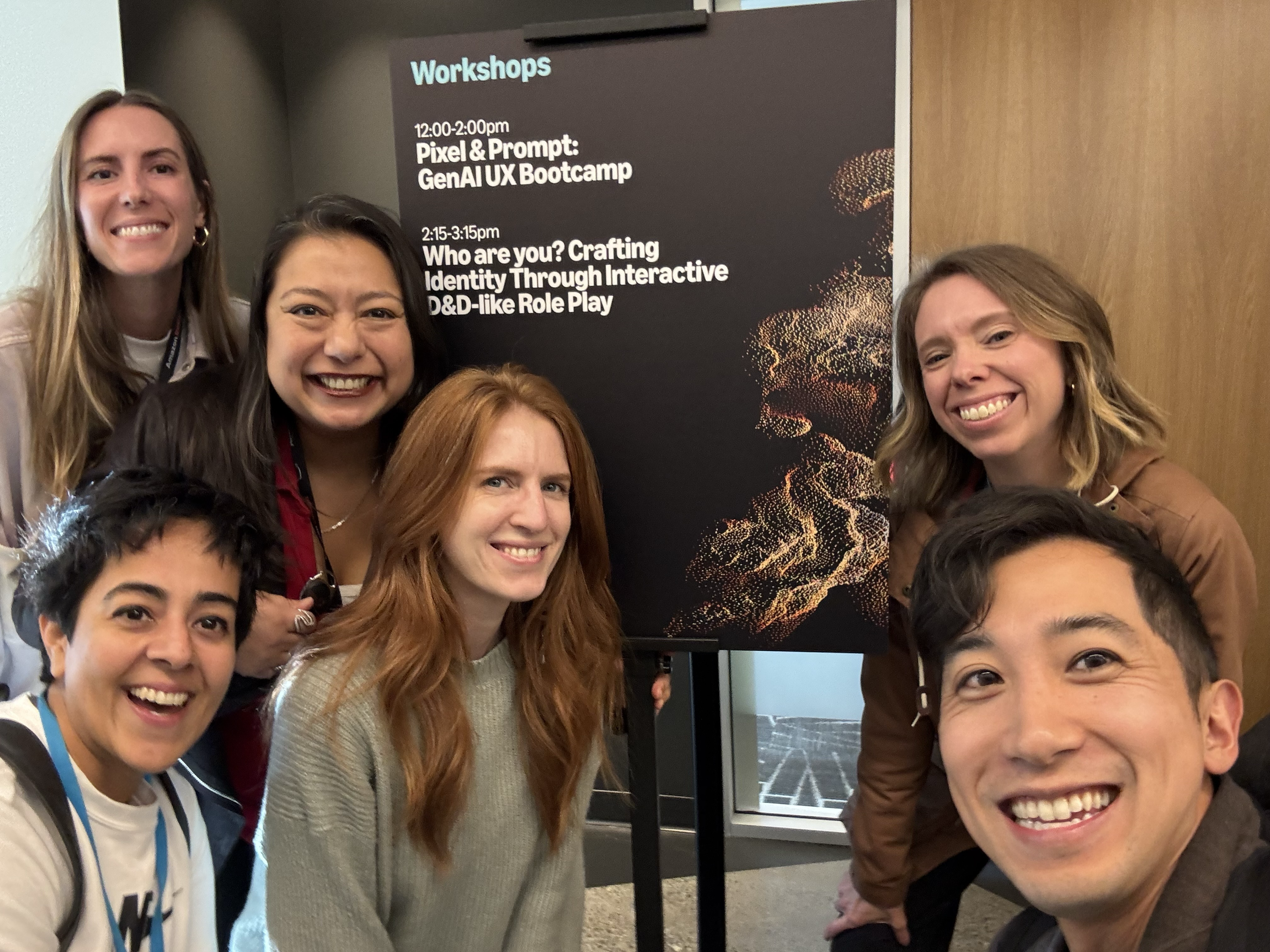
As the design lead, I helped teams understand what this meant in practice; running workshops and hackathons to explore capabilities and limitations, and partnering with product and engineering to define how generative AI should influence behavior, voice, and longer-term relationship dynamics.

03
Designing for the Illusion of life
Anything that moves, and especially anything that speaks, invites people to project life onto it.
Designing for embodied AI therefore requires more than defining features or capabilities; it requires careful consideration of a system’s perceived identity.
The Character Design Framework is a formalization of tools and approaches I developed over seven years working in embodied AI. It has been used internally to inform product strategy and feature definition, and was exhibited at Amazon’s internal design conference, Conflux, in 2025.
Copyright 2025 • Jonathan Ota
Amazon Astro
Principal HRI Designer | 2017 – present
Training robots how to live with humans for Amazon’s first home social robot, Astro.
Key Contributions
As a Principal HRI Designer, I was responsible for shaping how Astro behaved as a social entity within the home, not just the digital UX experience.

01 - What are you doing Astro?
- Lead the development of the foundational on-device behavioral patterns
- Launched end-to-end use cases like Hangouts and Video Calling
- Defined the visual style for Astro’s visual communication
02 - Social Robotics in the LLM Era
- Spearhead the design initiative to integrate Gen AI across all aspects of the Astro experience
- Lead the design team approach to utilizing LLMs
03 - Designing for the Illusion of Life
- Designed a Character Design Framework to guide the creation of a consistent character
- Created methodologies to measure relationship with embodied AI
01
What are you doing Astro?
Unlike screen-based products, Astro communicated through movement. Every action was physical, visible, and emotionally legible.
As the on-device HRI lead, I partnered closely with engineering to define the behavioral building blocks that allowed Astro to act like a predictable, trustworthy autonomous agent.
This meant resolving questions like how Astro should respond when it lost track of a person, how it could signal where it intended to move, and how existing experiences, like Alexa video calling, needed to change for a mobile, embodied platform
Follow HRI Pattern + Video Calling Use Case
Character Forward Status Indicators
Find + Porter
02
Social Robotics in the LLM era
Large language models introduced a step-change in how social robots could reason, communicate, and adapt over time.
As the design lead, I helped teams understand what this meant in practice; running workshops and hackathons to explore capabilities and limitations, and partnering with product and engineering to define how generative AI should influence behavior, voice, and longer-term relationship dynamics.
03
Designing for the Illusion of life
Anything that moves, and especially anything that speaks, invites people to project life onto it.
Designing for embodied AI therefore requires more than defining features or capabilities; it requires careful consideration of a system’s perceived identity.
The Character Design Framework is a formalization of tools and approaches I developed over seven years working in embodied AI. It has been used internally to inform product strategy and feature definition, and was exhibited at Amazon’s internal design conference, Conflux, in 2025.
Copyright 2025 • Jonathan Ota

Amazon Astro
Principal HRI Designer | 2017 – present
Training robots how to live with humans for Amazon’s first home social robot, Astro.
Key Contributions
As a Principal HRI Designer, I was responsible for shaping how Astro behaved as a social entity within the home, not just the digital UX experience.

01 - What are you doing Astro?
- Lead the development of the foundational on-device behavioral patterns
- Launched end-to-end use cases like Hangouts and Video Calling
- Defined the visual style for Astro’s visual communication
02 - Social Robotics in the LLM Era
- Spearhead the design initiative to integrate Gen AI across all aspects of the Astro experience
- Lead the design team approach to utilizing LLMs
03 - Designing for the Illusion of Life
- Designed a Character Design Framework to guide the creation of a consistent character
- Created methodologies to measure relationship with embodied AI
01
What are you doing Astro?
Unlike screen-based products, Astro communicated through movement. Every action was physical, visible, and emotionally legible.
As the on-device HRI lead, I partnered closely with engineering to define the behavioral building blocks that allowed Astro to act like a predictable, trustworthy autonomous agent.
This meant resolving questions like how Astro should respond when it lost track of a person, how it could signal where it intended to move, and how existing experiences, like Alexa video calling, needed to change for a mobile, embodied platform
Follow HRI Pattern + Video Calling Use Case
Character Forward Status Indicators
Find + Porter
02
Social Robotics in the LLM era
Large language models introduced a step-change in how social robots could reason, communicate, and adapt over time.
As the design lead, I helped teams understand what this meant in practice; running workshops and hackathons to explore capabilities and limitations, and partnering with product and engineering to define how generative AI should influence behavior, voice, and longer-term relationship dynamics.
03
Designing for the Illusion of life
Anything that moves, and especially anything that speaks, invites people to project life onto it.
Designing for embodied AI therefore requires more than defining features or capabilities; it requires careful consideration of a system’s perceived identity.
The Character Design Framework is a formalization of tools and approaches I developed over seven years working in embodied AI. It has been used internally to inform product strategy and feature definition, and was exhibited at Amazon’s internal design conference, Conflux, in 2025.

Copyright 2025 • Jonathan Ota